
THE MID-TIER MANIFESTO
THE DEMOCRATIZATION OF THE CINEMATIC SENSOR
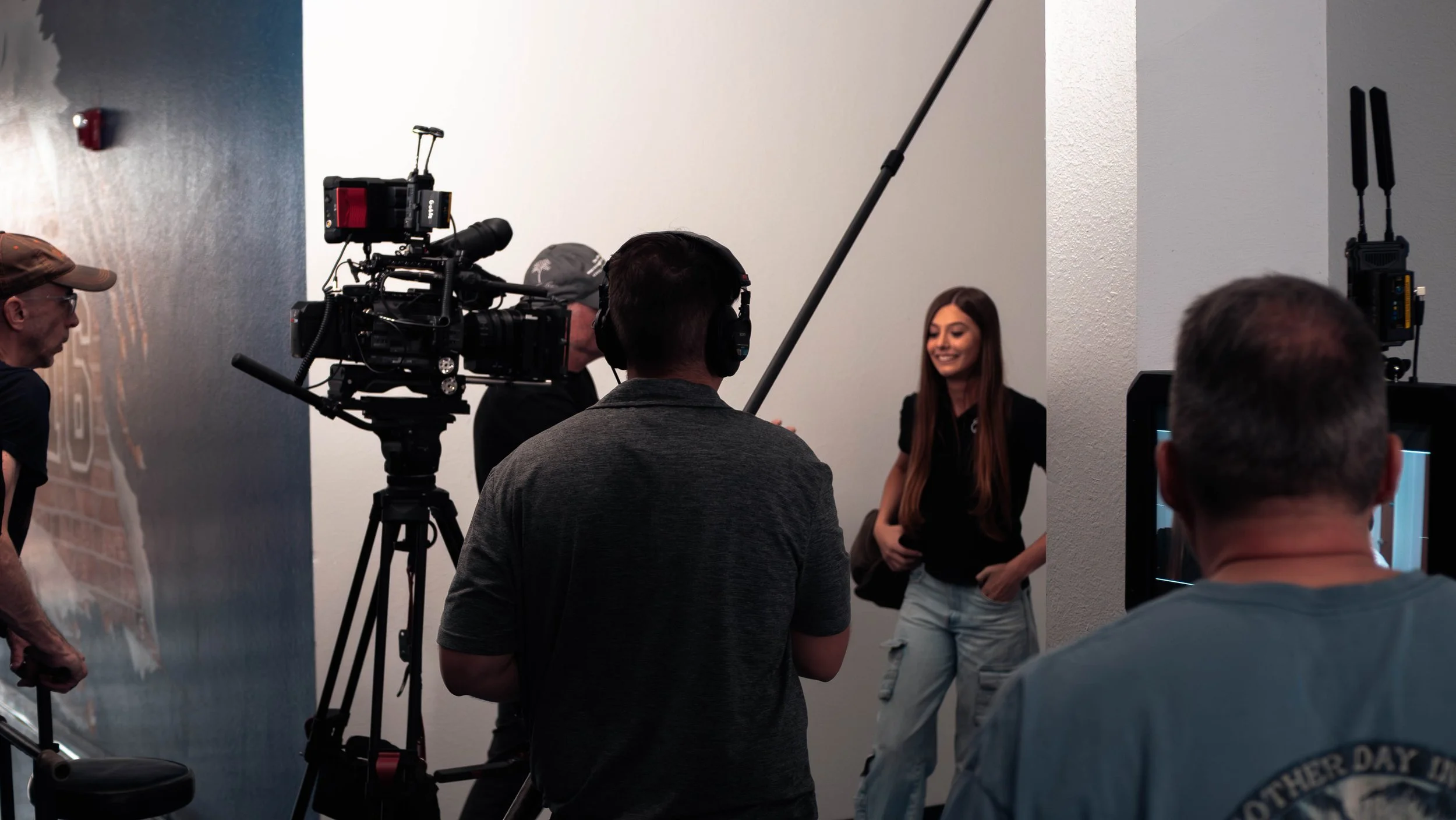
We were invited on set of the filming of a full-length feature that is TBA. By Creative Works Studios.
By Eric Smith
LAS VEGAS, NV - When I first started conceptualizing the framework for Creative Works Studios back in 2016, the "Standard" for high-end video production in Las Vegas was dictated by a massive, visible wealth gap. If you weren't a Tier-1 casino property with a mid-six-figure budget for a 30-second spot, you were essentially locked out of the "Cinema" conversation. You were left navigating a landscape of "prosumer" camcorders and DSLR footage that, while functional, lacked the structural integrity and visual texture of a true motion picture.
In those days, "Cinema" was a gated community. The entrance fee was the $100,000 USD required to field an Arri Alexa kit or a Panavision lease. If you didn't have that capital, you were playing in a different league. But today, as I stand on the set of a major upcoming film (currently TBA), I am witnessing a total collapse of those old barriers. The "brain" at the center of this professional rig (seen in the updated plate above) isn't a $60,000 studio behemoth; it’s a Sony FX6—a camera that sits comfortably under the $8,000 threshold.
This isn't just about a cheaper camera; it is about a fundamental shift in how we architect the moving image. For the independent creator or the boutique agency trying to make sense of the 2026 production landscape, this is your compass. We are moving away from the era of "expensive gear as status" and into the era of Boutique Authority.
Here is how the mid-tier revolution is redefining the scope of cinema and how you can use this infrastructure to command authority in your own work.
1. Shattering the $8,000 Glass Ceiling
The updated image from the set showcases the FX6 in its natural habitat—fully rigged with a wireless follow-focus, a V-mount power distribution system, and a high-brightness monitor. Even when dressed in this full professional cage, the core sensor costs less than a used sedan. Yet, this "mid-tier" beast produces a 15-stop dynamic range image that was scientifically impossible at this price point a decade ago.
We have reached a point of diminishing returns in resolution. The human eye can only perceive so much "sharpness," but it can instinctively feel "texture." The democratization of these sensors means that the visual gap between a high-end corporate documentary and a Netflix original has effectively been erased. In fact, because the FX6 is on the Netflix Approved list, the technical "Standard" for global streaming is now a tool you can carry in a backpack.
The Lesson for Creators: Stop waiting for the "Big Budget" to start filming with authority. The barrier is no longer the hardware; it is your ability to manage the physics of the light hitting that sensor. In the photo, you can see the crew managing light and shadow in a tight corridor—the camera is just the tool capturing that intentionality.
2. Lower Stakes, Higher Risks
One of the most profound changes in the "Scope of Cinema" is the newfound willingness to take risks. When a camera body costs as much as a house, the production becomes conservative. You don't put a $100,000 Arri in a position where it might get crushed, splashed, or dropped unless you have an insurance premium that could feed a small village.
On this TBA set, I watched the crew move with a "Las Vegas Sprint" mentality. Because the FX6 is compact and relatively affordable, it allows for a level of Intimate Cinematography that was previously a logistical nightmare.
The Mobility Factor: As seen in the framing of the shot, you can rig these mid-tier bodies onto small gimbals or even handheld poles to get the camera into spaces where a larger rig simply wouldn't fit.
Experimental Freedom: We are seeing more experimental, high-octane shots because the "cost of failure" has plummeted. If a $6,000 body is damaged during a high-risk stunt, the production keeps moving. This freedom to fail is exactly what leads to the most iconic, ground-breaking visuals.
3. The Rise of the "A-Cam" B-Roll
In the old world of production, there was a hierarchy: The "A-Camera" was the expensive cinema rig, and the "B-Camera" was a cheaper DSLR used for "extra" angles. This created a massive headache in post-production. The colors didn't match, the grain structure was different, and the "texture" of the footage felt disjointed.
In the modern "Standard" workflow, we no longer settle for lower-quality secondary footage. Because mid-tier cameras are accessible, the "B-Camera" is now a carbon copy of the "A-Camera."
Post-Production Infrastructure: Having matching sensors across all units saves thousands of dollars in color grading. It allows the editor to focus on the narrative rather than spending hours trying to make two different sensors look like they belong in the same world.
Consistency as Authority: When your secondary angles look just as "expensive" as your primary shots, the entire production gains an unshakeable level of authority.
4. The Science of the Image: Utility over Gadgetry
It is a common misconception that "more expensive" always means "better." In 2026, the difference is found in Utility. The Sony FX6’s "Superpower" isn’t its 4K resolution—it’s its Internal Variable ND Filter and Dual Base ISO.
During the shoot I attended, the lighting conditions were chaotic. We moved from dark interiors to bright, high-contrast hallways in a matter of minutes. In the traditional world, this would require a "Stop Down"—swapping physical filters and re-balancing a matte box.
The Variable ND Solution: On the FX6, a simple dial adjustment keeps your aperture exactly where it needs to be, maintaining that "shallow depth of field" look regardless of the light.
Dual Base ISO: The ability to jump to ISO 12,800 and maintain a clean, noise-free image means that "available light" is no longer a limitation; it’s a stylistic choice. We can now film in near-darkness and produce a "Quiet Luxury" texture that looks intentional and expensive, not amateur.
5. Boutique Authority: Setting the New Standard
The hardware no longer defines the professional; the infrastructure of the story does. A small, nimble agency using an $8,000 camera and a $2,000 lighting kit can now produce a visual product that is indistinguishable from a major studio's work.
This has forced the "Old Guard" of the industry to stop competing on equipment access and start competing on Creative Architecture. At Creative Works Studios, we embrace this. We aren't interested in the most expensive gear for the sake of vanity; we are interested in the Precision Architecture of the image—using the most efficient, high-performance tools to scale our clients' authority.
The lesson from the set was clear: The Standard is a mindset. The camera is merely the "ingest" point for your vision. What makes a shot look "Cinematic" isn't just the Sony sensor—it’s the way the light hits the obsidian-like textures of the set, the way the crew manages the "Science of Sound," and the authoritative strategy behind every frame.
THE TAKEAWAY
Is the $100,000 camera dead? No. There will always be a place for the Arri Alexa 65 on $200 million spectacles. But for the Digital Flagships we build—the high-end brand films, the strategic documentaries, and the authoritative social content—the mid-tier revolution is the new "Standard."
It offers a level of Boutique Authority that was once impossible, proving that in the modern era, great cinema is no longer about how much you spend, but how well you see.
If you are navigating a rebrand or looking to architect a new digital presence that requires "Studio Grade" visuals without the "Old Guard" overhead, Creative Works Studios is here to define your standard. Let’s build something that outlasts the trends.
Are you navigating a rebrand or looking to architect a new digital presence? Creative Works Studios specializes in high-tier brand infrastructure. Let’s define your standard.